



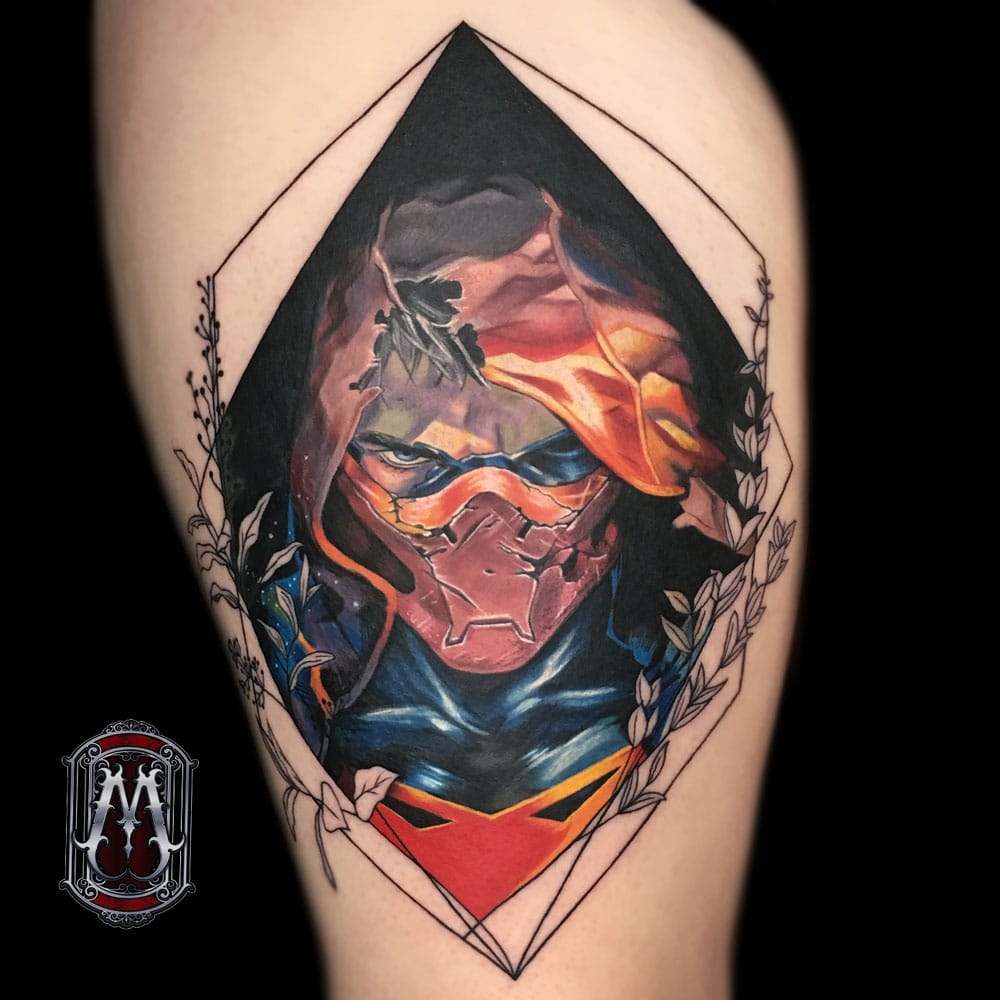
Ever wonder why some tattoos look like they were made for the body they're on — while others look pasted on? The difference usually comes down to two things we obsess over at Modified Tattoo Gallery: fitment and placement. It's the foundation of every strong piece we do, no matter the style — neo-traditional, traditional, realism, or new school.
Here's how we think about it, and why it makes your tattoo look better on day one and decades later.
What "fitment and placement" really means
Fitment and placement is the practice of designing a tattoo around your body instead of just picking a spot to stick a picture. Before any needle touches skin, we map the design to your natural anatomy — the flow of your muscles, the curve of a shoulder, the length of a forearm, the taper of a calf.
When a design follows those lines, it looks alive. When it fights them, it looks flat and awkward — even if the artwork itself is beautiful. Good flow is why a great tattoo reads clearly from across the room.
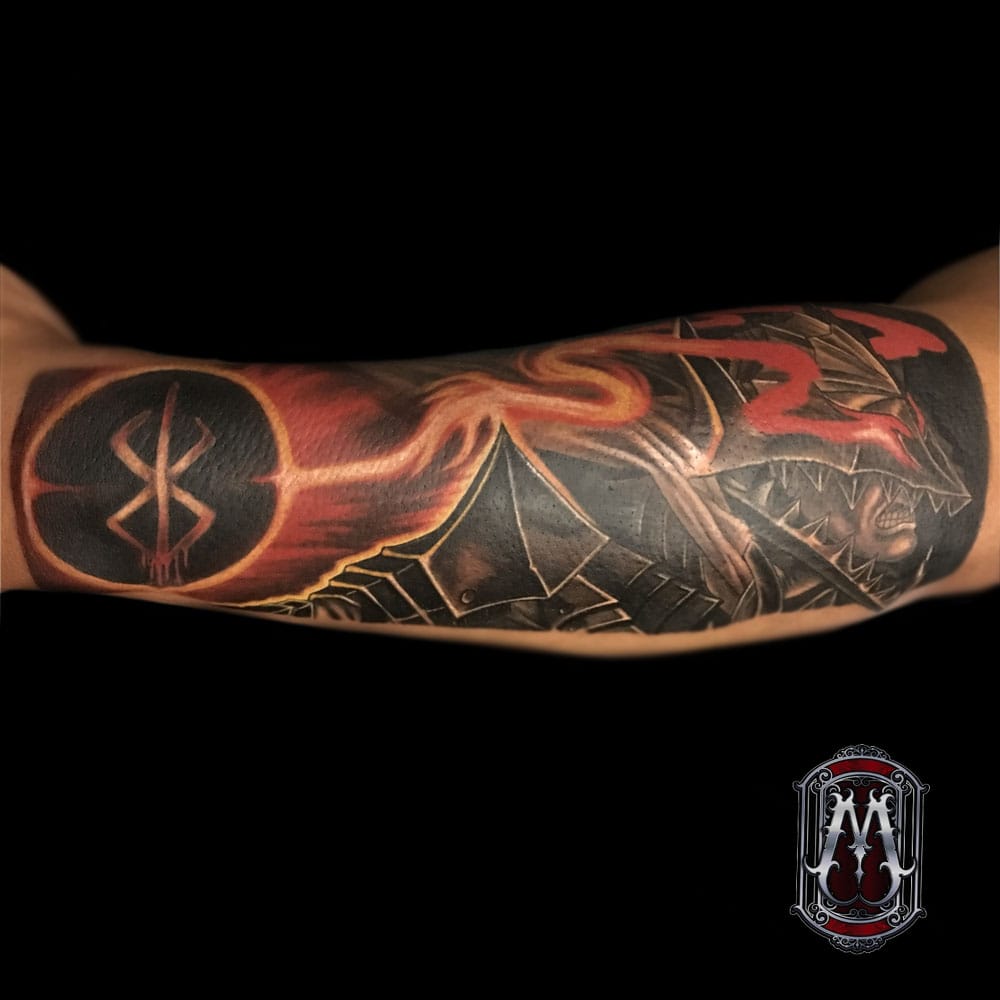
Notice how this sleeve wraps the forearm — the composition bends with the arm's muscle instead of sitting on top of it.
Choosing a light source: where the drama comes from
Once the design fits the body, our artists choose a light-source direction — an imaginary "sun" that decides where every highlight and shadow falls. This single choice is what gives a piece its dramatic, three-dimensional feel.
We borrow the same language photographers and cinematographers use:
- Lighting & light direction — committing to one clear light source so the whole piece feels sculpted and real, not lit from everywhere at once.
- Contrast — pushing dark darks against bright brights. High contrast is what makes a tattoo pop, stay readable, and age well as the skin naturally softens over the years.
- Color grading — keeping the color palette harmonious and intentional, so warm and cool tones support the mood instead of competing.
- Bokeh & depth — softening or blurring background elements (that dreamy, out-of-focus look) so your eye locks onto the main subject — the focal point.
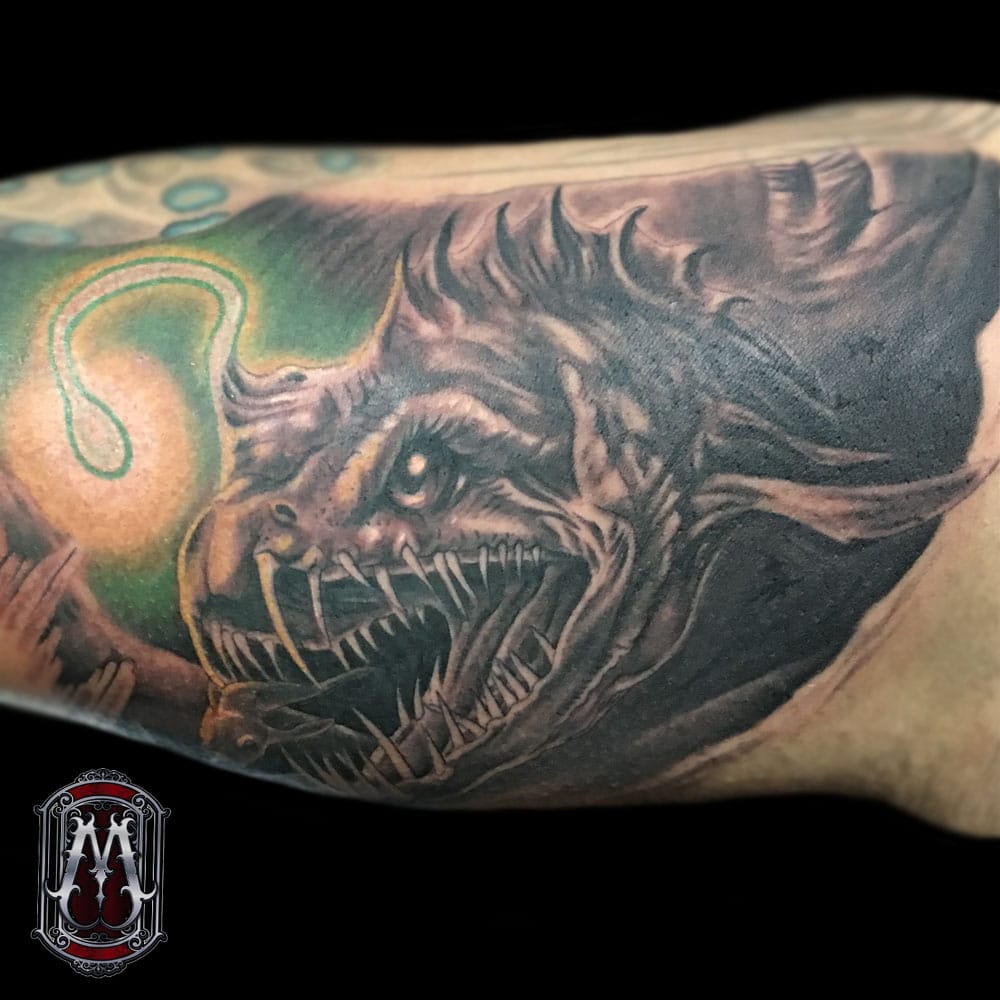
Here the anglerfish's glowing lure is the light source — everything is lit from that one point, which is exactly what gives it depth and menace.
A focal point, then everything supports it
Every piece we design has a clear main focal point, and fitment/placement exists to serve it. We build the composition so your anatomy frames the hero of the tattoo, the light source dramatizes it, and softer supporting details (backgrounds, filler, bokeh) guide the eye toward it rather than stealing attention.
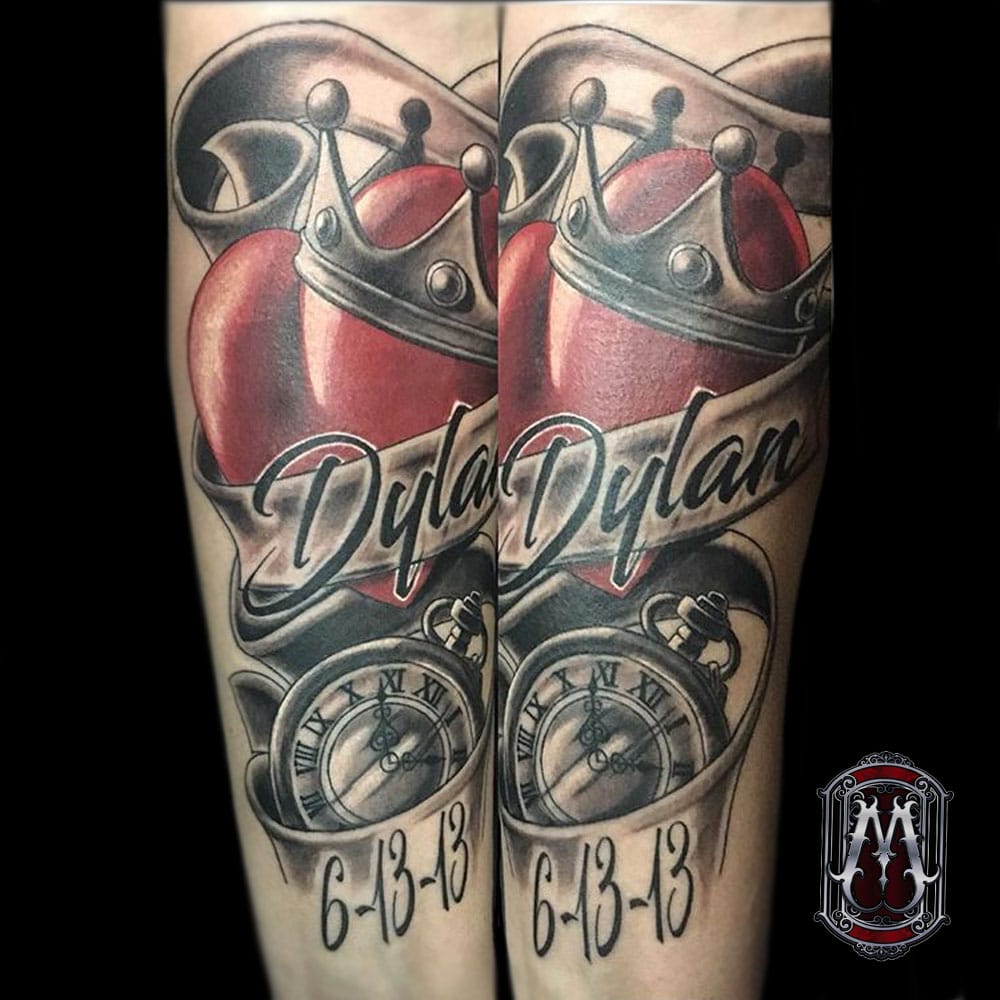
A new-school piece built to run the length of the forearm — the crown, banner, and watch stack naturally down the limb.
Why this makes your tattoo last
Strong fitment, a committed light source, and high contrast aren't just about looking good in the photo. They're about longevity:
- High contrast keeps a design legible for years as fine detail naturally softens.
- Designs that follow your anatomy wear evenly and continue to flatter the body as it moves and changes.
- A bold, well-lit composition reads across many skin tones — the same principles that make a piece dramatic also make it visible and lasting on a wide range of body pigments.
Standing on the shoulders of the greats
These ideas aren't new — they're the craft. Much of the modern vocabulary around flow, fit, contrast, and lighting was formalized by renowned tattoo artist Guy Aitchison in his landmark educational work, Reinventing the Tattoo — for nearly two decades the gold-standard art-education resource in the industry. Aitchison teaches that because the human body is a flowing form, a design must move with its shapes or it will fight the anatomy. We build on that foundation every day. You can explore his work at guyaitchison.com and reinventingthetattoo.com.
Design your piece with us
Every tattoo at Modified Tattoo Gallery starts with a conversation about your body, your idea, and how to make the two flow together. Browse our artists or see Justen's portfolio and book a consultation — and let's design something built to fit you and last.